
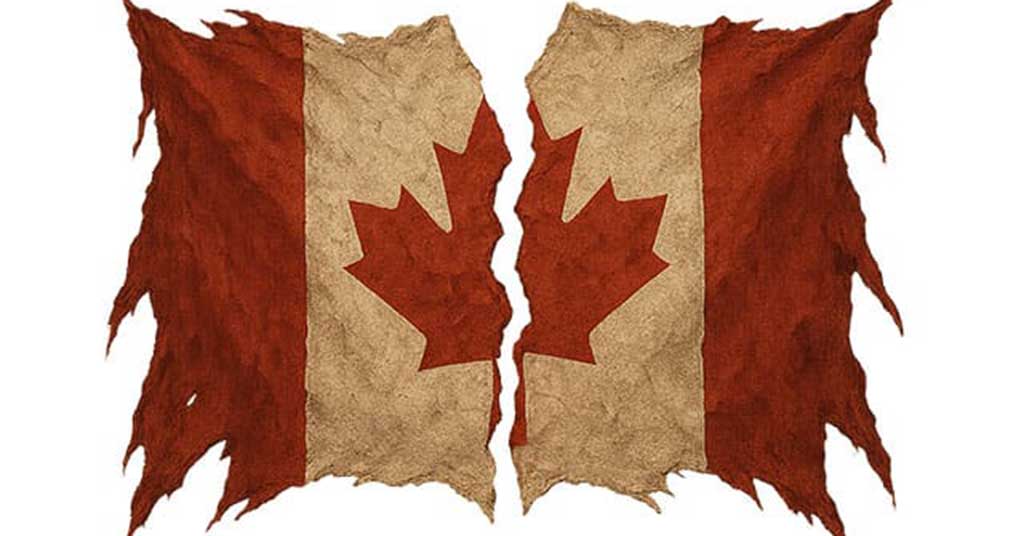
Democracy doesn’t disappear. Citizens just stop showing up and government is left to the elites
Winston Churchill once remarked that “democracy is the worst form of government except for all those other forms that have been tried from time to time.” Really? We might begin by asking the question, “If democracy is so great, why is its failure rate so high?”
The Athenians who invented democracy discovered that it had a very short shelf-life, perishing in less than 200 years. The democratic elements of the Roman Republic were erased by the senatorial class. The city-states of the Italian Renaissance fell into the hands of powerful oligarchs and bankers like the Medici. The French Revolution of 1789 lapsed into authoritarianism, followed by the rule of a general who crowned himself an emperor.
The First World War was to make the world “safe for democracy,” and sure enough, 1919 saw the appearance of nine new republics. By 1939, only Finland remained a democracy. In the post-war period we can see the same mass failure of democratic states in Latin America, Africa, Asia and the Arab world. History suggests that democracies rarely collapse all at once; they more often decay slowly as citizens cease to defend them.
Given the fact that few democracies have ever survived into old age, how much hope should we place in the expectation that the Canadian version will long endure? I think the facts will show that, in Canada, the citizenry prefers the low-calorie version, all the appearance of a real democracy but with none of the hard work it takes to sustain the reality. Like other democracies before it, a system that depends on active citizens weakens when those citizens stop participating.
Ask yourself what causes the greatest anguish to our souls: the Canadian men’s hockey team losing to the Americans or the suspension of our civil liberties by two prime ministers with the same last name? What makes us more inclined to go “elbows up,” Trump mocking us or our public universities ensuring that dissident ideas are suppressed?
We are largely indifferent to the fact that our human rights tribunals don’t protect the freedom of speech exercised by teachers, nurses or school trustees but are often the ones punishing them for wrongthink. When citizens accept such limits without protest, democratic accountability weakens.
We long ago ceased expecting that cabinet ministers would resign when proven to be failures. When the fisheries department kills off all the cod, when finance ministers make us more indebted and more unemployed, we shrug. Why get upset?
Canadians simply aren’t enthusiastic supporters of the democratic process. Only about one per cent of Canadians join political parties, the lowest rate among Western democracies. Voter turnout places us roughly in the middle among NATO countries. Our civic culture accepts that a small number of extremists will always dominate debate and advance legislation because (a) most of us can’t be bothered to make a fuss and (b) they are the only ones going to be allowed on CBC morning programs anyway.
Canadians long ago abandoned expecting a vigorous exchange of views in newspapers, allowing the monopoly of one-paper towns and forcing the nation’s media class to feed from the government trough.
Right now, our federal politicians are taking time from their busy work in reducing food prices, making housing affordable and solving the immigration crisis to discuss three bills (Bill C-9, Bill C-63 and Bill C-254) designed to curb free expression.
There is little likelihood that Canadian democracy will be smothered by a revolutionary coup or fall prey to a smooth-talking dictator. Instead, we have lapsed into what Alexis de Tocqueville called a “soft despotism, trading active citizenship for a paternalistic administration.”
If you don’t like that state of affairs, what are you going to do about it?
Gerry Bowler is a Canadian historian and a senior fellow at the Frontier Centre for Public Policy.
Explore more on Democracy, Human Rights, Free speech, Carney government
The views, opinions, and positions expressed by our columnists and contributors are solely their own and do not necessarily reflect those of our publication.
Troy Media empowers Canadian community news outlets by providing independent, insightful analysis and commentary. Our mission is to support local media in helping Canadians stay informed and engaged by delivering reliable content that strengthens community connections and deepens understanding across the country.

